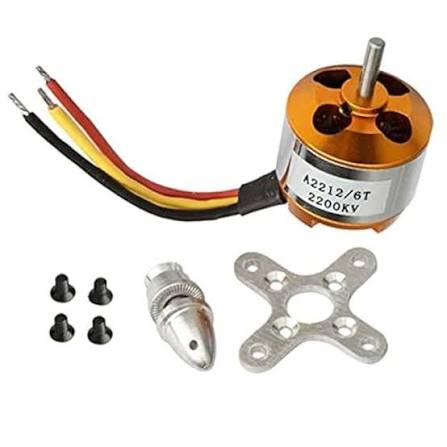
The 2200KV Brushless DC Outrunner Motor is a high-performance, precision-engineered motor designed for hobbyists, makers, and professionals alike. With its 2200KV rating—meaning it spins at 2200 RPM per volt under no load—this motor delivers rapid acceleration and high rotational speed, making it ideal for lightweight RC aircraft, drones, and other high-RPM applications. Built from premium-grade materials including neodymium magnets, high-purity copper windings, and precision ball bearings, it offers excellent efficiency, durability, and power-to-weight ratio.
This motor requires an Electronic Speed Controller (ESC) for operation and is a popular choice for applications where fast response and high thrust-to-weight performance are critical.
Key Features:
2200KV Rating: Optimized for high RPM applications, offering rapid throttle response and high-speed performance.
Brushless Outrunner Design: Increases torque output while maintaining smooth, quiet, and efficient operation with minimal maintenance.
High-Quality Construction:
Neodymium Magnets: Deliver strong magnetic fields for enhanced torque and efficiency.
High-Purity Copper Windings: Maximize electrical conductivity and thermal stability.
Precision Ball Bearings: Minimize friction and prolong motor life.
Efficient Cooling System: Open-frame outrunner construction and/or integrated cooling fins help dissipate heat during extended use.
Lightweight & Compact: Optimized power-to-weight ratio, essential for flight performance and maneuverability in RC models.
Precision-Balanced Rotor: Reduces vibration for smoother operation and better reliability.
Standardized Mounting Patterns: Compatible with common motor mounts for easy integration.
Connector Flexibility: Typically shipped with pre-soldered 3.5mm or 4mm bullet connectors, or bare leads for custom setups.
Typical Applications:
RC Aircraft:
Park flyers, sport planes, trainers (with 2S–3S LiPo and appropriate propellers)
Small EDF (Electric Ducted Fan) jets
Multirotors / Drones:
FPV racing drones, micro to mid-sized quadcopters, and hexacopters (3S–4S LiPo, 5–8” props)
RC Helicopters:
Suitable as a main motor in 250–450 class electric helis
RC Cars & Trucks (Limited Use):
Smaller scale models (1/12 to 1/18) with appropriate gearing
RC Boats:
Ideal for compact, high-speed electric boats with sufficient cooling
DIY Robotics & Custom Projects:
High-RPM electric tools, kinetic devices, and compact drive systems
Technical Specifications(Typical Ranges – Verify with Datasheet):
Parameter
Value
KV Rating
2200 RPM/Volt
Motor Type
Brushless Outrunner
Operating Voltage
7.4V – 14.8V (2S–4S LiPo)
Max Continuous Current
15A – 60A (depends on motor size)
Max Power Output
150W – 800W+
No-Load Current (Io @ 10V)
0.5A – 2.5A
Internal Resistance (Ri)
0.03Ω – 0.15Ω
Shaft Diameter
3mm, 3.175mm (1/8″), 4mm, 5mm
Common Motor Sizes
2205, 2212, 2836, 3536 (diameter x length in mm)
Weight
30g – 150g+ (varies by motor size)
Mounting Hole Spacing
16×19mm, 19×25mm (varies by model)
Connectors
3.5mm or 4mm bullet connectors (or bare leads)
Propeller Recommendations (Based on Voltage & Motor Size):
Battery
Propeller Range
2S LiPo
8×4 – 10×5
3S LiPo
6×4 – 8×4.5
4S LiPo
5×3 – 7×4
⚠️ Always consult the motor’s datasheet or use a motor calculator to prevent overloading and overheating.
Recommended ESC:
Match or exceed the motor’s maximum current draw
Add a 20–30% safety margin (e.g., a motor drawing 30A should use a 40A ESC)
Use BLHeli, SimonK, or other ESCs supporting brushless outrunner control
Important Considerations:
Battery Matching: Use LiPo batteries with adequate voltage and C-rating to meet current demands.
Prop Size Caution: Oversized props can overload the system—carefully test setups or refer to manufacturer guidance.
Thermal Management: Ensure proper airflow, especially in enclosed models or high-load applications.
Datasheet Reference: Always refer to the specific motor’s datasheet for exact specs, limits, and wiring configuration.
🔌
Pin Connections
1 Table
Pin Connections Table 1
Board
Sensor Pin
Connection
Motor
3-phase to ESC
motor's 3 wires into the ESC's motor output (any 2 swapped reverses direction)
📟
2200KV Brushless DC Motor - High-Speed Powerhouse for RC & DIY Projects
2200KV Brushless DC Motor - High-Speed Powerhouse for RC & DIY Projects - Arduino Uno
2200KV Brushless DC Motor - High-Speed Powerhouse for RC & DIY Projects - Arduino Nano
2200KV Brushless DC Motor - High-Speed Powerhouse for RC & DIY Projects - Arduino Mega
2200KV Brushless DC Motor - High-Speed Powerhouse for RC & DIY Projects - ESP32
2200KV Brushless DC Motor - High-Speed Powerhouse for RC & DIY Projects - ESP8266
2200KV Brushless DC Motor - High-Speed Powerhouse for RC & DIY Projects - STM32
2200KV Brushless DC Motor - High-Speed Powerhouse for RC & DIY Projects - Raspberry Pi Pico
📄 File: 2200kv_brushless_dc_motor_-_high-speed_powerhouse_for_rc_&_diy_projects_-_arduino_uno.inoArduino Uno
921 characters
1//ekostra.com
2//electronics store in egypt
3//+201008896258
4
5// This is a bare brushless motor - it CANNOT be driven directly from any GPIO pin or H-bridge; it needs a matching ESC (electronic speed controller) wired in between. The code below is for driving it through that ESC.
6// ESC signal pin 9 on Arduino Uno. ESCs speak the same protocol as a hobby servo (1000-2000us pulses), so the Servo library works even though there's no rotation involved.
7#include <Servo.h>
8
9Servo esc;
10#define ESC_PIN 9
11
12voidsetup() {
13Serial.begin(115200);
14 esc.attach(ESC_PIN, 1000, 2000);
15 esc.writeMicroseconds(1000); // arm at minimum throttle - required by most ESCs before they'll accept commands
16delay(3000);
17}
18
19voidloop() {
20 esc.writeMicroseconds(1300); // low throttle - INCREASE GRADUALLY AND CAREFULLY with a real propeller attached
21delay(2000);
22 esc.writeMicroseconds(1000); // back to minimum
5// This is a bare brushless motor - it CANNOT be driven directly from any GPIO pin or H-bridge; it needs a matching ESC (electronic speed controller) wired in between. The code below is for driving it through that ESC.
6// ESC signal pin 9 on Arduino Nano. ESCs speak the same protocol as a hobby servo (1000-2000us pulses), so the Servo library works even though there's no rotation involved.
7#include <Servo.h>
8
9Servo esc;
10#define ESC_PIN 9
11
12voidsetup() {
13Serial.begin(115200);
14 esc.attach(ESC_PIN, 1000, 2000);
15 esc.writeMicroseconds(1000); // arm at minimum throttle - required by most ESCs before they'll accept commands
16delay(3000);
17}
18
19voidloop() {
20 esc.writeMicroseconds(1300); // low throttle - INCREASE GRADUALLY AND CAREFULLY with a real propeller attached
21delay(2000);
22 esc.writeMicroseconds(1000); // back to minimum
23delay(2000);
24}
📄 File: 2200kv_brushless_dc_motor_-_high-speed_powerhouse_for_rc_&_diy_projects_-_arduino_mega.inoArduino Mega
922 characters
1//ekostra.com
2//electronics store in egypt
3//+201008896258
4
5// This is a bare brushless motor - it CANNOT be driven directly from any GPIO pin or H-bridge; it needs a matching ESC (electronic speed controller) wired in between. The code below is for driving it through that ESC.
6// ESC signal pin 9 on Arduino Mega. ESCs speak the same protocol as a hobby servo (1000-2000us pulses), so the Servo library works even though there's no rotation involved.
7#include <Servo.h>
8
9Servo esc;
10#define ESC_PIN 9
11
12voidsetup() {
13Serial.begin(115200);
14 esc.attach(ESC_PIN, 1000, 2000);
15 esc.writeMicroseconds(1000); // arm at minimum throttle - required by most ESCs before they'll accept commands
16delay(3000);
17}
18
19voidloop() {
20 esc.writeMicroseconds(1300); // low throttle - INCREASE GRADUALLY AND CAREFULLY with a real propeller attached
21delay(2000);
22 esc.writeMicroseconds(1000); // back to minimum
5// This is a bare brushless motor - it CANNOT be driven directly from any GPIO pin or H-bridge; it needs a matching ESC (electronic speed controller) wired in between. The code below is for driving it through that ESC.
6// ESC signal pin 25 on ESP32. ESCs speak the same protocol as a hobby servo (1000-2000us pulses), so the Servo library works even though there's no rotation involved.
7#include <Servo.h>
8
9Servo esc;
10#define ESC_PIN 25
11
12voidsetup() {
13Serial.begin(115200);
14 esc.attach(ESC_PIN, 1000, 2000);
15 esc.writeMicroseconds(1000); // arm at minimum throttle - required by most ESCs before they'll accept commands
16delay(3000);
17}
18
19voidloop() {
20 esc.writeMicroseconds(1300); // low throttle - INCREASE GRADUALLY AND CAREFULLY with a real propeller attached
21delay(2000);
22 esc.writeMicroseconds(1000); // back to minimum
5// This is a bare brushless motor - it CANNOT be driven directly from any GPIO pin or H-bridge; it needs a matching ESC (electronic speed controller) wired in between. The code below is for driving it through that ESC.
6// ESC signal pin D1 on ESP8266. ESCs speak the same protocol as a hobby servo (1000-2000us pulses), so the Servo library works even though there's no rotation involved.
7#include <Servo.h>
8
9Servo esc;
10#define ESC_PIN D1
11
12voidsetup() {
13Serial.begin(115200);
14 esc.attach(ESC_PIN, 1000, 2000);
15 esc.writeMicroseconds(1000); // arm at minimum throttle - required by most ESCs before they'll accept commands
16delay(3000);
17}
18
19voidloop() {
20 esc.writeMicroseconds(1300); // low throttle - INCREASE GRADUALLY AND CAREFULLY with a real propeller attached
21delay(2000);
22 esc.writeMicroseconds(1000); // back to minimum
5// This is a bare brushless motor - it CANNOT be driven directly from any GPIO pin or H-bridge; it needs a matching ESC (electronic speed controller) wired in between. The code below is for driving it through that ESC.
6// ESC signal pin PA8 on STM32. ESCs speak the same protocol as a hobby servo (1000-2000us pulses), so the Servo library works even though there's no rotation involved.
7#include <Servo.h>
8
9Servo esc;
10#define ESC_PIN PA8
11
12voidsetup() {
13Serial.begin(115200);
14 esc.attach(ESC_PIN, 1000, 2000);
15 esc.writeMicroseconds(1000); // arm at minimum throttle - required by most ESCs before they'll accept commands
16delay(3000);
17}
18
19voidloop() {
20 esc.writeMicroseconds(1300); // low throttle - INCREASE GRADUALLY AND CAREFULLY with a real propeller attached
21delay(2000);
22 esc.writeMicroseconds(1000); // back to minimum
23delay(2000);
24}
📄 File: 2200kv_brushless_dc_motor_-_high-speed_powerhouse_for_rc_&_diy_projects_-_raspberry_pi_pico.inoRaspberry Pi Pico
929 characters
1//ekostra.com
2//electronics store in egypt
3//+201008896258
4
5// This is a bare brushless motor - it CANNOT be driven directly from any GPIO pin or H-bridge; it needs a matching ESC (electronic speed controller) wired in between. The code below is for driving it through that ESC.
6// ESC signal pin 15 on Raspberry Pi Pico. ESCs speak the same protocol as a hobby servo (1000-2000us pulses), so the Servo library works even though there's no rotation involved.
7#include <Servo.h>
8
9Servo esc;
10#define ESC_PIN 15
11
12voidsetup() {
13Serial.begin(115200);
14 esc.attach(ESC_PIN, 1000, 2000);
15 esc.writeMicroseconds(1000); // arm at minimum throttle - required by most ESCs before they'll accept commands
16delay(3000);
17}
18
19voidloop() {
20 esc.writeMicroseconds(1300); // low throttle - INCREASE GRADUALLY AND CAREFULLY with a real propeller attached
21delay(2000);
22 esc.writeMicroseconds(1000); // back to minimum
23delay(2000);
24}
Bare brushless motor - requires a matching ESC (sold separately) between it and the microcontroller; cannot be driven by an H-bridge like a brushed motor.




 Specification


