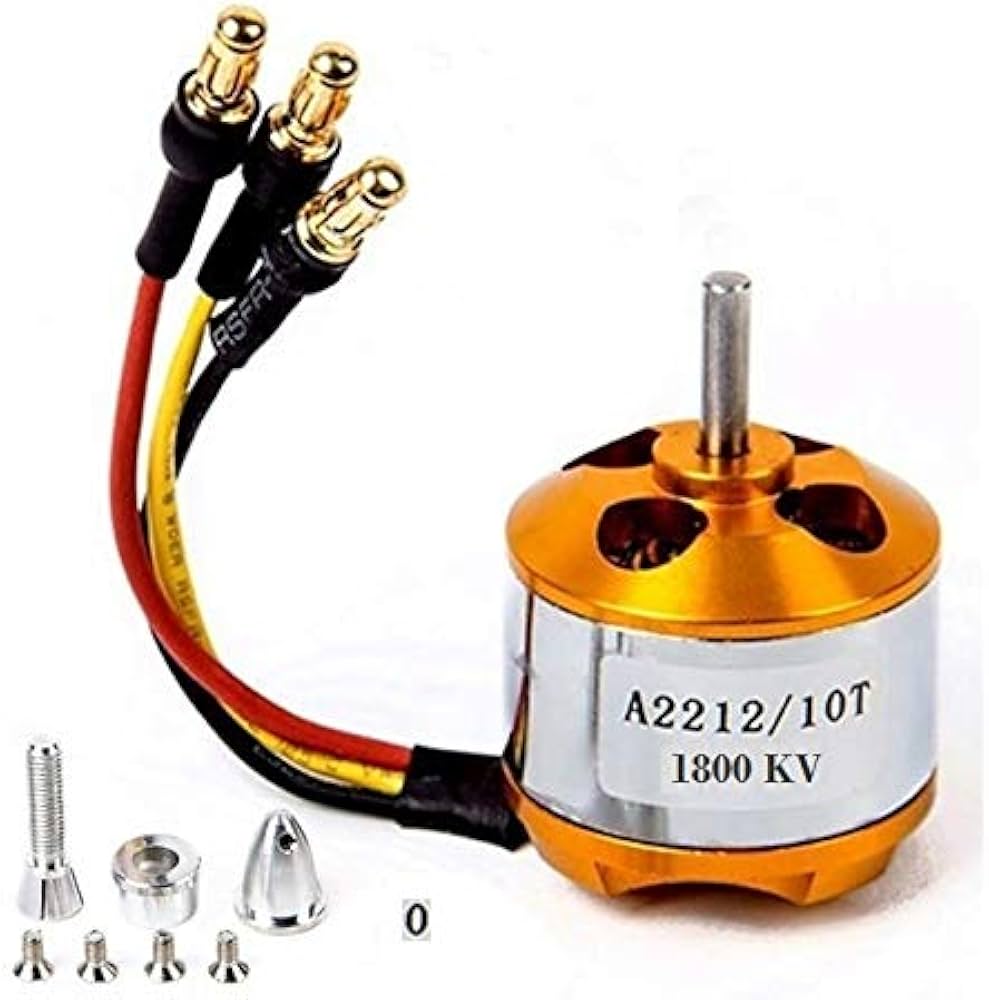
1800KV Brushless Motor

  • 1800KV Rating for high-speed rotation and efficient performance

  • Outrunner Design ideal for drones, RC planes, and robotics

  • Lightweight & Compact for aerial and mobile applications

  • High Torque Output with low noise operation

  • Compatible with ESCs for smooth and precise speed control

Apple Shopping Event

Hurry and get discounts on all Apple devices up to 20%

475,00 EGP

11 People watching this product now!

Payment Methods:

475,00 EGP
110,00 EGP
585,00 EGP
For 2 items

Description

Product Overview:

The 1800KV Brushless DC Outrunner Motor is a powerful, high-efficiency motor engineered for enthusiasts and professionals seeking reliable torque and smooth performance. With a KV rating of 1800 RPM per volt, this motor strikes an optimal balance between rotational speed and torque, making it particularly well-suited for larger propellers, heavier payloads, and off-road torque-intensive tasks.

Constructed using high-grade neodymium magnets, thermally resistant copper windings, precision-balanced rotors, and durable ball bearings, this motor offers superior performance with reduced noise and vibration. Whether you’re powering a scale aircraft, mid-sized quadcopter, off-road buggy, or a custom electric vehicle, this motor delivers robust and efficient power you can count on.

⚙️ Requires a compatible Electronic Speed Controller (ESC) for operation.


Key Features:

  • High Torque Output: The lower 1800KV rating generates greater torque, ideal for turning larger propellers or driving heavier loads at lower RPMs.

  • Brushless Outrunner Design: Increases efficiency and torque while offering longer service life and minimal maintenance.

  • Premium-Grade Materials:

    • Neodymium Magnets: For superior magnetic strength and torque density.

    • Precision Ball Bearings: Ensure smooth operation, reduced friction, and extended durability.

    • High-Purity Copper Windings: Enhance current efficiency and heat resilience.

  • Effective Cooling Architecture:

    • Outrunner design promotes natural airflow.

    • Many models feature integrated cooling fins or fan blades on the bell for active heat dissipation.

  • Factory-Balanced Rotor: Reduces vibration for smoother operation and less wear on frames, mounts, and drive systems.

  • Flexible Voltage Compatibility: Operates effectively across 3S–6S LiPo (11.1V–22.2V), allowing for various levels of performance tuning.

  • Standard Mounting Patterns: Compatible with common RC motor mounts and frames.

  • Connector Ready: Typically equipped with 3.5mm, 4mm, or 5.5mm bullet connectors, or available as bare leads for custom wiring.


Ideal Applications:

  • RC Airplanes:

    • Scale models requiring large propellers for realism and performance.

    • 3D aerobatic or sport planes demanding strong thrust and control authority.

    • Larger park flyers and trainer aircraft using 3S–6S LiPo setups.

  • RC Drones / Multirotors:

    • Mid-to-large-sized quadcopters using 7–10 inch propellers on 4S–6S LiPo.

    • Long-range and endurance FPV drones prioritizing flight time and efficiency.

    • Aerial photography and videography drones where stable, low-noise thrust is needed.

  • RC Cars & Trucks:

    • Ideal for 1/10 and 1/8 scale off-road buggies, truggies, and monster trucks.

    • Offers a powerful combination of speed and torque for rugged terrain and jumps.

  • RC Helicopters:

    • Main motor for 450–500 class electric helis, often used with 6S LiPo to achieve target head speeds.

  • RC Boats:

    • Suitable for torque-demanding scale boats or speed cruisers.

    • May require water cooling jackets for sustained performance.

  • Electric Skateboards / DIY Mobility:

    • Used in belt-drive or hub motor configurations, delivering excellent startup torque and efficiency for personal EV projects.


Technical Specifications (Typical Range – Check Manufacturer Datasheet for Specific Model):

Parameter Typical Range
KV Rating 1800 RPM/Volt
Operating Voltage 11.1V – 22.2V (3S – 6S LiPo)
Max Continuous Current 20A – 80A+ (depends on motor size)
Max Power Output 300W – 1500W+
No-Load Current (Io @ 10V) 0.8A – 3.0A
Internal Resistance (Ri) 0.02Ω – 0.10Ω
Shaft Diameter 3.175mm (1/8″), 4mm, 5mm (5mm most common)
Common Motor Sizes 2836, 3536, 3542, 3650 (Inrunner), 4068
Weight 60g – 250g+ (varies by motor size)
Connector Type 3.5mm / 4mm / 5.5mm bullet connectors

Recommended Propeller Sizes (for Aircraft Use):

Battery Suggested Prop Range
3S LiPo 10×5 – 12×6
4S LiPo 9×6 – 11×5.5
6S LiPo 7×5 – 9×4

🔧 Always test propeller loads gradually and consult manufacturer charts or e-calculators to prevent overloading.


ESC Recommendation:

  • Select an ESC rated at least 20–30% higher than the motor’s max current draw.

  • Ensure voltage compatibility with the battery (e.g., a 6S-capable ESC if using 22.2V).

  • Use programmable ESCs (e.g., BLHeli, Castle, or Hobbywing) for optimal throttle response and safety.


Important Considerations:

  • KV ≠ Power: A lower KV motor doesn’t mean less power—it means more torque at lower RPM for a given voltage.

  • Prop & Load Matching: Over-propping or improper gearing can overheat the motor or ESC. Always test incrementally.

  • Battery Implications: Higher cell counts (voltage) increase RPM. Make sure your motor, ESC, and prop can handle the resulting speed and current.

  • Datasheet Accuracy: These are generalized specs. Refer to the exact motor model’s datasheet for safe and optimal operation.

🔌
Pin Connections
1 Table
Pin Connections Table 1
BoardSensor PinConnection
Motor3-phase to ESCmotor's 3 wires into the ESC's motor output (any 2 swapped reverses direction)
📟
1800KV Brushless Motor
7 Examples • C/C++ | Boards: Arduino Uno, Arduino Nano, Arduino Mega, ESP32, ESP8266, STM32, Raspberry Pi Pico
1800KV Brushless Motor - Arduino Uno
1800KV Brushless Motor - Arduino Nano
1800KV Brushless Motor - Arduino Mega
1800KV Brushless Motor - ESP32
1800KV Brushless Motor - ESP8266
1800KV Brushless Motor - STM32
1800KV Brushless Motor - Raspberry Pi Pico
📄 File: 1800kv_brushless_motor_-_arduino_uno.inoArduino Uno
921 characters
1//ekostra.com
2//electronics store in egypt
3//+201008896258
4
5// This is a bare brushless motor - it CANNOT be driven directly from any GPIO pin or H-bridge; it needs a matching ESC (electronic speed controller) wired in between. The code below is for driving it through that ESC.
6// ESC signal pin 9 on Arduino Uno. ESCs speak the same protocol as a hobby servo (1000-2000us pulses), so the Servo library works even though there's no rotation involved.
7#include <Servo.h>
8
9Servo esc;
10#define ESC_PIN 9
11
12void setup() {
13 Serial.begin(115200);
14 esc.attach(ESC_PIN, 1000, 2000);
15 esc.writeMicroseconds(1000); // arm at minimum throttle - required by most ESCs before they'll accept commands
16 delay(3000);
17}
18
19void loop() {
20 esc.writeMicroseconds(1300); // low throttle - INCREASE GRADUALLY AND CAREFULLY with a real propeller attached
21 delay(2000);
22 esc.writeMicroseconds(1000); // back to minimum
23 delay(2000);
24}
📄 File: 1800kv_brushless_motor_-_arduino_nano.inoArduino Nano
922 characters
1//ekostra.com
2//electronics store in egypt
3//+201008896258
4
5// This is a bare brushless motor - it CANNOT be driven directly from any GPIO pin or H-bridge; it needs a matching ESC (electronic speed controller) wired in between. The code below is for driving it through that ESC.
6// ESC signal pin 9 on Arduino Nano. ESCs speak the same protocol as a hobby servo (1000-2000us pulses), so the Servo library works even though there's no rotation involved.
7#include <Servo.h>
8
9Servo esc;
10#define ESC_PIN 9
11
12void setup() {
13 Serial.begin(115200);
14 esc.attach(ESC_PIN, 1000, 2000);
15 esc.writeMicroseconds(1000); // arm at minimum throttle - required by most ESCs before they'll accept commands
16 delay(3000);
17}
18
19void loop() {
20 esc.writeMicroseconds(1300); // low throttle - INCREASE GRADUALLY AND CAREFULLY with a real propeller attached
21 delay(2000);
22 esc.writeMicroseconds(1000); // back to minimum
23 delay(2000);
24}
📄 File: 1800kv_brushless_motor_-_arduino_mega.inoArduino Mega
922 characters
1//ekostra.com
2//electronics store in egypt
3//+201008896258
4
5// This is a bare brushless motor - it CANNOT be driven directly from any GPIO pin or H-bridge; it needs a matching ESC (electronic speed controller) wired in between. The code below is for driving it through that ESC.
6// ESC signal pin 9 on Arduino Mega. ESCs speak the same protocol as a hobby servo (1000-2000us pulses), so the Servo library works even though there's no rotation involved.
7#include <Servo.h>
8
9Servo esc;
10#define ESC_PIN 9
11
12void setup() {
13 Serial.begin(115200);
14 esc.attach(ESC_PIN, 1000, 2000);
15 esc.writeMicroseconds(1000); // arm at minimum throttle - required by most ESCs before they'll accept commands
16 delay(3000);
17}
18
19void loop() {
20 esc.writeMicroseconds(1300); // low throttle - INCREASE GRADUALLY AND CAREFULLY with a real propeller attached
21 delay(2000);
22 esc.writeMicroseconds(1000); // back to minimum
23 delay(2000);
24}
📄 File: 1800kv_brushless_motor_-_esp32.inoESP32
917 characters
1//ekostra.com
2//electronics store in egypt
3//+201008896258
4
5// This is a bare brushless motor - it CANNOT be driven directly from any GPIO pin or H-bridge; it needs a matching ESC (electronic speed controller) wired in between. The code below is for driving it through that ESC.
6// ESC signal pin 25 on ESP32. ESCs speak the same protocol as a hobby servo (1000-2000us pulses), so the Servo library works even though there's no rotation involved.
7#include <Servo.h>
8
9Servo esc;
10#define ESC_PIN 25
11
12void setup() {
13 Serial.begin(115200);
14 esc.attach(ESC_PIN, 1000, 2000);
15 esc.writeMicroseconds(1000); // arm at minimum throttle - required by most ESCs before they'll accept commands
16 delay(3000);
17}
18
19void loop() {
20 esc.writeMicroseconds(1300); // low throttle - INCREASE GRADUALLY AND CAREFULLY with a real propeller attached
21 delay(2000);
22 esc.writeMicroseconds(1000); // back to minimum
23 delay(2000);
24}
📄 File: 1800kv_brushless_motor_-_esp8266.inoESP8266
919 characters
1//ekostra.com
2//electronics store in egypt
3//+201008896258
4
5// This is a bare brushless motor - it CANNOT be driven directly from any GPIO pin or H-bridge; it needs a matching ESC (electronic speed controller) wired in between. The code below is for driving it through that ESC.
6// ESC signal pin D1 on ESP8266. ESCs speak the same protocol as a hobby servo (1000-2000us pulses), so the Servo library works even though there's no rotation involved.
7#include <Servo.h>
8
9Servo esc;
10#define ESC_PIN D1
11
12void setup() {
13 Serial.begin(115200);
14 esc.attach(ESC_PIN, 1000, 2000);
15 esc.writeMicroseconds(1000); // arm at minimum throttle - required by most ESCs before they'll accept commands
16 delay(3000);
17}
18
19void loop() {
20 esc.writeMicroseconds(1300); // low throttle - INCREASE GRADUALLY AND CAREFULLY with a real propeller attached
21 delay(2000);
22 esc.writeMicroseconds(1000); // back to minimum
23 delay(2000);
24}
📄 File: 1800kv_brushless_motor_-_stm32.inoSTM32
919 characters
1//ekostra.com
2//electronics store in egypt
3//+201008896258
4
5// This is a bare brushless motor - it CANNOT be driven directly from any GPIO pin or H-bridge; it needs a matching ESC (electronic speed controller) wired in between. The code below is for driving it through that ESC.
6// ESC signal pin PA8 on STM32. ESCs speak the same protocol as a hobby servo (1000-2000us pulses), so the Servo library works even though there's no rotation involved.
7#include <Servo.h>
8
9Servo esc;
10#define ESC_PIN PA8
11
12void setup() {
13 Serial.begin(115200);
14 esc.attach(ESC_PIN, 1000, 2000);
15 esc.writeMicroseconds(1000); // arm at minimum throttle - required by most ESCs before they'll accept commands
16 delay(3000);
17}
18
19void loop() {
20 esc.writeMicroseconds(1300); // low throttle - INCREASE GRADUALLY AND CAREFULLY with a real propeller attached
21 delay(2000);
22 esc.writeMicroseconds(1000); // back to minimum
23 delay(2000);
24}
📄 File: 1800kv_brushless_motor_-_raspberry_pi_pico.inoRaspberry Pi Pico
929 characters
1//ekostra.com
2//electronics store in egypt
3//+201008896258
4
5// This is a bare brushless motor - it CANNOT be driven directly from any GPIO pin or H-bridge; it needs a matching ESC (electronic speed controller) wired in between. The code below is for driving it through that ESC.
6// ESC signal pin 15 on Raspberry Pi Pico. ESCs speak the same protocol as a hobby servo (1000-2000us pulses), so the Servo library works even though there's no rotation involved.
7#include <Servo.h>
8
9Servo esc;
10#define ESC_PIN 15
11
12void setup() {
13 Serial.begin(115200);
14 esc.attach(ESC_PIN, 1000, 2000);
15 esc.writeMicroseconds(1000); // arm at minimum throttle - required by most ESCs before they'll accept commands
16 delay(3000);
17}
18
19void loop() {
20 esc.writeMicroseconds(1300); // low throttle - INCREASE GRADUALLY AND CAREFULLY with a real propeller attached
21 delay(2000);
22 esc.writeMicroseconds(1000); // back to minimum
23 delay(2000);
24}
Bare brushless motor - requires a matching ESC (sold separately) between it and the microcontroller; cannot be driven by an H-bridge like a brushed motor.

Specification

Specification

WeightWeight40 g
Dimensions4 × 3 × 3 cm
Motor TypeBrushless DC Motor (BLDC)
KV Rating1800KV (RPM per Volt)
VoltageTypically 7.4V–11.1V LiPo (2S–3S)
ShaftSingle shaft (diameter depends on model)
MaterialMetal and plastic components
UsageRC drones, cars, boats, robotics, and DIY electronics projects

Customer Reviews