


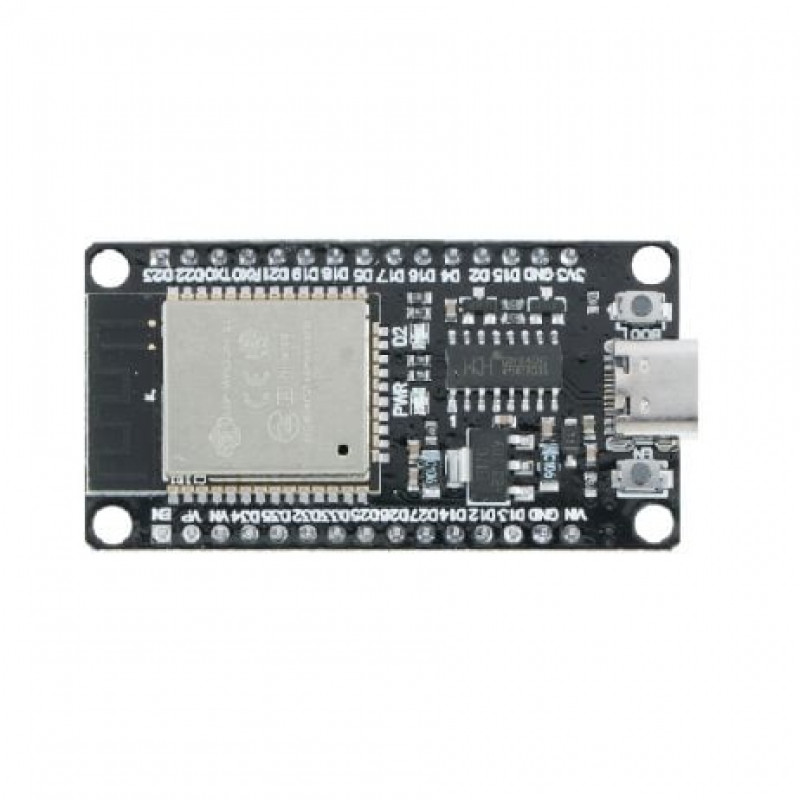
ESP32 Type-C 30Pin Development Board (Wi-Fi Bluetooth)
- Dual-core 32-bit processor (up to 240 MHz)
- Integrated Wi-Fi (2.4 GHz) & Bluetooth (v4.2 BLE)
- USB Type-C interface for power & programming
- 30 GPIO pins with multiple peripheral functions
- Supports Arduino IDE, MicroPython, ESP-IDF
- 4 MB Flash memory for large applications
- On-board voltage regulator (5 V → 3.3 V)
- Compact design with reset and boot buttons

Apple Shopping Event
400,00 EGP
Payment Methods:

Description
The ESP32 Type-C 30Pin Development Board is a powerful and compact microcontroller module featuring dual-core 32-bit processing, built-in Wi-Fi and Bluetooth connectivity, and a modern USB Type-C port for power and programming.
It’s ideal for IoT, automation, robotics, and wireless sensor projects. Compatible with Arduino IDE, MicroPython, and ESP-IDF, it offers outstanding flexibility and performance for both beginners and advanced developers.
Keywords: ESP32 development board, Wi-Fi Bluetooth module, ESP32 Type-C, IoT microcontroller, Arduino compatible board, ESP32 30 pin.
⚙️ Short Features
-
Dual-core 32-bit processor (up to 240 MHz)
-
Integrated Wi-Fi (2.4 GHz) & Bluetooth (v4.2 BLE)
-
USB Type-C interface for power & programming
-
30 GPIO pins with multiple peripheral functions
-
Supports Arduino IDE, MicroPython, ESP-IDF
-
4 MB Flash memory for large applications
-
On-board voltage regulator (5 V → 3.3 V)
-
Compact design with reset and boot buttons
📊 Specifications
| Parameter | Details |
|---|---|
| Microcontroller | ESP32-WROOM-32 (dual-core Xtensa LX6) |
| Clock Speed | Up to 240 MHz |
| Flash Memory | 4 MB (SPI) |
| SRAM | 520 KB |
| Connectivity | Wi-Fi 802.11 b/g/n, Bluetooth v4.2 BR/EDR + BLE |
| Operating Voltage | 3.3 V logic |
| Input Voltage (via USB-C) | 5 V |
| GPIO Pins | 30 (PWM, ADC, DAC, UART, SPI, I2C, etc.) |
| Analog Inputs (ADC) | 18-channel 12-bit |
| PWM Channels | Up to 16 |
| USB Interface | Type-C (CH340/CP2102 USB-to-UART chip) |
| Programming Platforms | Arduino IDE, MicroPython, PlatformIO, ESP-IDF |
| Operating Temperature | −40 °C to +85 °C |
| Dimensions | Approx. 57 × 28 × 9 mm |
🚀 Applications
-
IoT (Internet of Things) projects
-
Smart home automation
-
Wireless sensor networks
-
Robotics & control systems
-
Data logging and cloud connectivity
-
Bluetooth beacons or BLE devices
-
DIY electronics and prototyping
📦 Package Includes
-
1 × ESP32 Type-C 30Pin Development Board (Wi-Fi + Bluetooth)
💡 Notes
-
Use USB Type-C cable for programming and power.
-
Ensure correct COM port and board type are selected in Arduino IDE.
-
Install CH340 or CP2102 driver if required (depends on version).
Specification
 Specification
| WeightWeight | 10 g |
|---|---|
| Dimensions | 5,8 × 2,8 × 1 cm |
| Product Name | ESP32 Type-C 30Pin Development Board (Wi-Fi Bluetooth) |
| Microcontroller | ESP32-WROOM-32 |
| CPU | Dual-Core 32-bit Xtensa LX6 @ 240MHz |
| Flash Memory | 4MB |
| SRAM | 520KB |
| Wi-Fi | 802.11 b/g/n |
| Bluetooth | Bluetooth v4.2 (BLE + Classic) |
| GPIO Pins | 30 Pins |
| Operating Voltage | 3.3V |
| Input Voltage (USB) | 5V via USB Type-C |
| Interfaces | UART, SPI, I2C, ADC, DAC, PWM |
| ADC Resolution | 12-bit |
| DAC Channels | 2 |
| PWM Channels | 16 |
| USB Port | USB Type-C |
| Onboard Regulator | 5V to 3.3V LDO |
| Boot Mode | Auto-download / Boot Button + EN Reset Button |
| Programming Compatibility | Arduino IDE, ESP-IDF, MicroPython |
| Protection | Overcurrent & USB Port Protection (varies by board) |


