
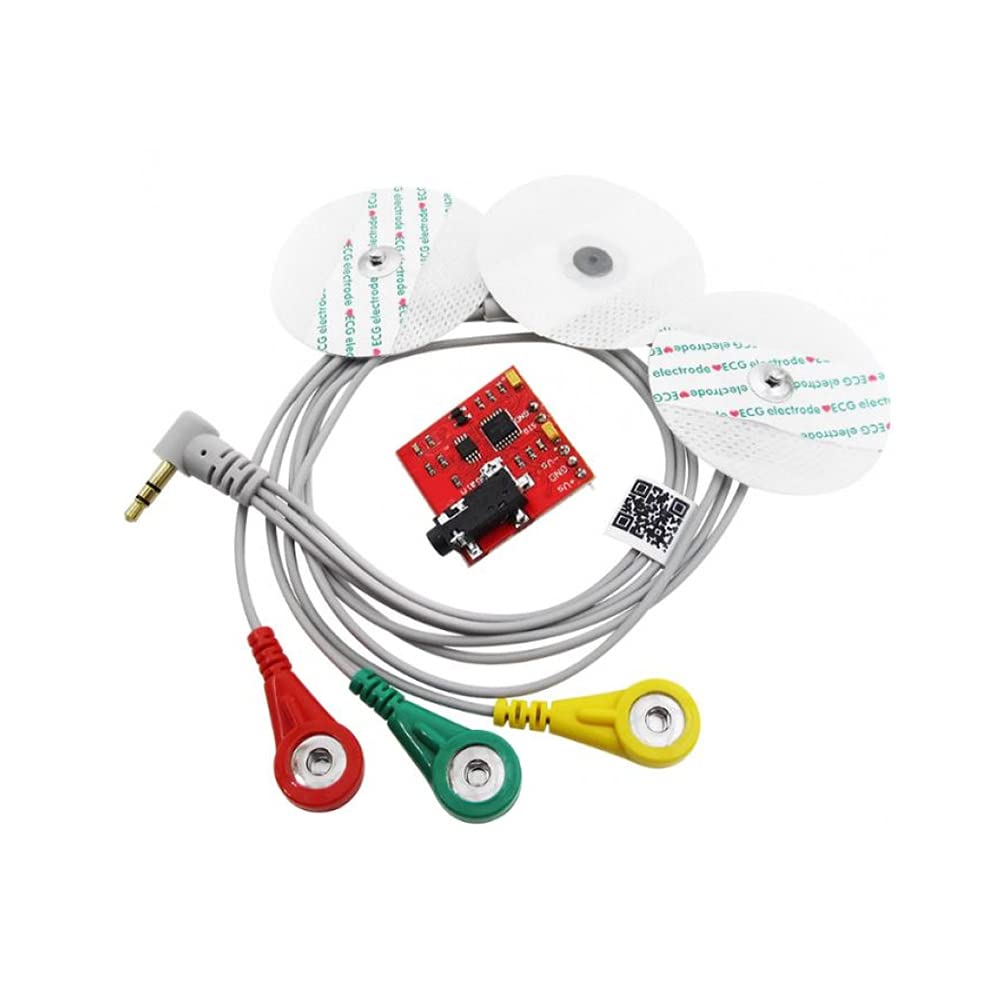
EMG Muscle Activity Sensor Module
Product Highlights
- Bio-Signal Detection: Captures microvolt electrical activity from muscle contractions.
- Adjustable Sensitivity: Built-in potentiometer to fine-tune gain for different muscle groups.
- Noise Reduction: Integrated filtering circuit ensures a clean analog output signal.
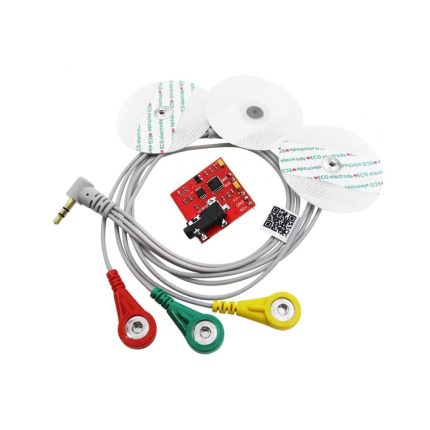
- Simple Connectivity: 3.5mm medical jack for electrodes and standard 3-pin microcontroller header.
- Bionics Ready: The ideal starting point for DIY prosthetic and robotic control projects.
1.200,00 EGP
In stock
In stock
Payment Methods:
Description
EMG Muscle Activity Sensor Module (Electromyography)
The EMG Muscle Activity Sensor Module is a sophisticated analog sensor designed to bridge
the gap between human biology and electronic systems. By detecting the microvolt (µV) electrical
potentials generated by muscle contractions, this module filters and amplifies the signal into a
readable analog voltage. It is a cornerstone component for developing DIY bionic limbs,
prosthetic controllers, and advanced human-machine interfaces (HMI).
Key Features
- High Sensitivity: Detects subtle muscle movements with precision amplification.
- On-Board Gain Control: Features an integrated potentiometer to adjust sensitivity based on the muscle group (e.g., forearm vs. bicep).
- Integrated Filtering: Built-in circuit filters out common electrical noise for a clean, reliable output signal.
- Plug-and-Play Interface: Standard 3.5mm medical jack for easy electrode connection and a 3-pin header for microcontrollers.
- Multi-Platform Compatibility: Works seamlessly with Arduino, ESP32, Raspberry Pi, and other ADC-capable boards.
Full Technical Specifications
| Feature | Specifications |
|---|---|
| Sensor Type | Analog EMG (Electromyography) |
| Operating Voltage | 3.3V to 5V DC |
| Output Signal | Analog Voltage (0V to VCC) |
| Connector Type | 3.5mm Medical-Grade Audio Jack |
| Detection Range | Adjustable via Potentiometer |
| PCB Dimensions | ~32mm x 27.2mm |
| Status Indicators | Power LED |
Electrode Placement Guide
For optimal results, follow the standard lead placement:
- Mid-Muscle (Red): Place directly on the center of the muscle being measured.
- End-Muscle (White): Place at the end of the same muscle near the tendon.
- Reference (Black): Place on a “neutral” bony area with no muscle activity (e.g., elbow or wrist).
Common Applications
- Bionics: Controlling robotic grippers or artificial limbs via muscle flex.
- Fitness Tech: Monitoring muscle engagement during exercises.
- Gaming: Creating gesture-based controllers for immersive experiences.
- Research: Basic human physiology and signal processing studies.
Safety & Usage: This module is intended for hobbyist and educational purposes only. It is not a medical-grade device and should never be used for medical diagnosis, treatment, or life-critical applications.
Specification
General
| WeightWeight | 0,0000 g |
|---|---|
| Product Name | EMG Muscle Activity Sensor Module |
| Type | Electromyography (EMG) Sensor |
| Operating Voltage | 3.3V – 5V DC |
| Signal Output | Analog / Digital (Depends on Module) |
| Sensitivity | Adjustable |
| Interface | Analog Pin / Digital Pin |
| Sampling Rate | Up to 1 kHz |
| Features | Detects Muscle Activity, Lightweight, Easy to Use |
| Application | Prosthetics, Robotics, Biofeedback, Wearable Devices |