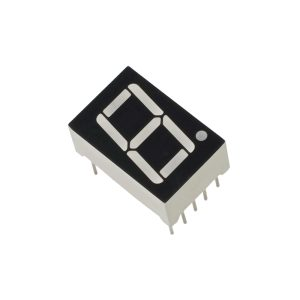
1 Digit 7 Segment LED Display 10pin Common Cathode

  • Single digit numeric display
  • Common cathode configuration
  • 10-pin package for easy wiring
  • Bright and clear LED segments
  • Suitable for digital clocks, counters, and indicators
  • Compatible with standard 7-segment drivers and microcontrollers

Apple Shopping Event

Hurry and get discounts on all Apple devices up to 20%

7,00 EGP

19 People watching this product now!

Payment Methods:

Description

The 1-Digit 7-Segment LED Display (Common Cathode, 10-Pin, Red) is a reliable and high-brightness numerical display solution for various electronic applications. It provides clear visibility, low power consumption, and easy PCB mounting, making it ideal for digital clocks, meters, and calculators. Designed for seamless integration, this display operates by illuminating different LED segments to form numbers 0-9 using an encoder-decoder IC or direct microcontroller control.

Summary Features:

Common Cathode Configuration – Suitable for various circuit designs.
Bright Red LED Display – Ensures clear numerical visibility.
Low Power Consumption – Energy-efficient and long-lasting performance.
Easy PCB Mounting – Simplifies installation in electronic projects.
Durable & ReliableBlack face with white segments for high contrast.
Versatile Applications – Used in digital meters, clocks, calculators, and more.

Package Includes:

1 x 0.56″ Red 1-Digit 7-Segment LED Display (10-Pin, Common Cathode)


🔌
Pin Connections
1 Table
Pin Connections Table 1
BoardSensor PinConnection
7-Segmenta-g + common7 board digital pins (via current-limiting resistors) / common pin to GND
📟
1 Digit 7 Segment LED Display 10pin Common Cathode
7 Examples • C/C++ | Boards: Arduino Uno, Arduino Nano, Arduino Mega, ESP32, ESP8266, STM32, Raspberry Pi Pico
1 Digit 7 Segment LED Display 10pin Common Cathode - Arduino Uno
1 Digit 7 Segment LED Display 10pin Common Cathode - Arduino Nano
1 Digit 7 Segment LED Display 10pin Common Cathode - Arduino Mega
1 Digit 7 Segment LED Display 10pin Common Cathode - ESP32
1 Digit 7 Segment LED Display 10pin Common Cathode - ESP8266
1 Digit 7 Segment LED Display 10pin Common Cathode - STM32
1 Digit 7 Segment LED Display 10pin Common Cathode - Raspberry Pi Pico
📄 File: 1_digit_7_segment_led_display_10pin_common_cathode_-_arduino_uno.inoArduino Uno
784 characters
1//ekostra.com
2//electronics store in egypt
3//+201008896258
4
5// Segments a-g on pins 2, 3, 4, 5, 6, 7, 8 on Arduino Uno. Common cathode: segments turn ON when driven HIGH.
6const int segPins[7] = {2, 3, 4, 5, 6, 7, 8}; // a, b, c, d, e, f, g
7
8// Which segments light up for digits 0-9 (1 = on)
9const bool digits[10][7] = {
10 {1,1,1,1,1,1,0}, {0,1,1,0,0,0,0}, {1,1,0,1,1,0,1}, {1,1,1,1,0,0,1}, {0,1,1,0,0,1,1},
11 {1,0,1,1,0,1,1}, {1,0,1,1,1,1,1}, {1,1,1,0,0,0,0}, {1,1,1,1,1,1,1}, {1,1,1,1,0,1,1},
12};
13
14void setup() {
15 for (int i = 0; i < 7; i++) pinMode(segPins[i], OUTPUT);
16}
17
18void showDigit(int d) {
19 for (int i = 0; i < 7; i++) {
20 digitalWrite(segPins[i], digits[d][i] ? HIGH : LOW);
21 }
22}
23
24void loop() {
25 for (int d = 0; d <= 9; d++) {
26 showDigit(d);
27 delay(500);
28 }
29}
📄 File: 1_digit_7_segment_led_display_10pin_common_cathode_-_arduino_nano.inoArduino Nano
785 characters
1//ekostra.com
2//electronics store in egypt
3//+201008896258
4
5// Segments a-g on pins 2, 3, 4, 5, 6, 7, 8 on Arduino Nano. Common cathode: segments turn ON when driven HIGH.
6const int segPins[7] = {2, 3, 4, 5, 6, 7, 8}; // a, b, c, d, e, f, g
7
8// Which segments light up for digits 0-9 (1 = on)
9const bool digits[10][7] = {
10 {1,1,1,1,1,1,0}, {0,1,1,0,0,0,0}, {1,1,0,1,1,0,1}, {1,1,1,1,0,0,1}, {0,1,1,0,0,1,1},
11 {1,0,1,1,0,1,1}, {1,0,1,1,1,1,1}, {1,1,1,0,0,0,0}, {1,1,1,1,1,1,1}, {1,1,1,1,0,1,1},
12};
13
14void setup() {
15 for (int i = 0; i < 7; i++) pinMode(segPins[i], OUTPUT);
16}
17
18void showDigit(int d) {
19 for (int i = 0; i < 7; i++) {
20 digitalWrite(segPins[i], digits[d][i] ? HIGH : LOW);
21 }
22}
23
24void loop() {
25 for (int d = 0; d <= 9; d++) {
26 showDigit(d);
27 delay(500);
28 }
29}
📄 File: 1_digit_7_segment_led_display_10pin_common_cathode_-_arduino_mega.inoArduino Mega
799 characters
1//ekostra.com
2//electronics store in egypt
3//+201008896258
4
5// Segments a-g on pins 22, 23, 24, 25, 26, 27, 28 on Arduino Mega. Common cathode: segments turn ON when driven HIGH.
6const int segPins[7] = {22, 23, 24, 25, 26, 27, 28}; // a, b, c, d, e, f, g
7
8// Which segments light up for digits 0-9 (1 = on)
9const bool digits[10][7] = {
10 {1,1,1,1,1,1,0}, {0,1,1,0,0,0,0}, {1,1,0,1,1,0,1}, {1,1,1,1,0,0,1}, {0,1,1,0,0,1,1},
11 {1,0,1,1,0,1,1}, {1,0,1,1,1,1,1}, {1,1,1,0,0,0,0}, {1,1,1,1,1,1,1}, {1,1,1,1,0,1,1},
12};
13
14void setup() {
15 for (int i = 0; i < 7; i++) pinMode(segPins[i], OUTPUT);
16}
17
18void showDigit(int d) {
19 for (int i = 0; i < 7; i++) {
20 digitalWrite(segPins[i], digits[d][i] ? HIGH : LOW);
21 }
22}
23
24void loop() {
25 for (int d = 0; d <= 9; d++) {
26 showDigit(d);
27 delay(500);
28 }
29}
📄 File: 1_digit_7_segment_led_display_10pin_common_cathode_-_esp32.inoESP32
792 characters
1//ekostra.com
2//electronics store in egypt
3//+201008896258
4
5// Segments a-g on pins 13, 14, 27, 26, 25, 33, 32 on ESP32. Common cathode: segments turn ON when driven HIGH.
6const int segPins[7] = {13, 14, 27, 26, 25, 33, 32}; // a, b, c, d, e, f, g
7
8// Which segments light up for digits 0-9 (1 = on)
9const bool digits[10][7] = {
10 {1,1,1,1,1,1,0}, {0,1,1,0,0,0,0}, {1,1,0,1,1,0,1}, {1,1,1,1,0,0,1}, {0,1,1,0,0,1,1},
11 {1,0,1,1,0,1,1}, {1,0,1,1,1,1,1}, {1,1,1,0,0,0,0}, {1,1,1,1,1,1,1}, {1,1,1,1,0,1,1},
12};
13
14void setup() {
15 for (int i = 0; i < 7; i++) pinMode(segPins[i], OUTPUT);
16}
17
18void showDigit(int d) {
19 for (int i = 0; i < 7; i++) {
20 digitalWrite(segPins[i], digits[d][i] ? HIGH : LOW);
21 }
22}
23
24void loop() {
25 for (int d = 0; d <= 9; d++) {
26 showDigit(d);
27 delay(500);
28 }
29}
📄 File: 1_digit_7_segment_led_display_10pin_common_cathode_-_esp8266.inoESP8266
794 characters
1//ekostra.com
2//electronics store in egypt
3//+201008896258
4
5// Segments a-g on pins D0, D1, D2, D3, D4, D5, D6 on ESP8266. Common cathode: segments turn ON when driven HIGH.
6const int segPins[7] = {D0, D1, D2, D3, D4, D5, D6}; // a, b, c, d, e, f, g
7
8// Which segments light up for digits 0-9 (1 = on)
9const bool digits[10][7] = {
10 {1,1,1,1,1,1,0}, {0,1,1,0,0,0,0}, {1,1,0,1,1,0,1}, {1,1,1,1,0,0,1}, {0,1,1,0,0,1,1},
11 {1,0,1,1,0,1,1}, {1,0,1,1,1,1,1}, {1,1,1,0,0,0,0}, {1,1,1,1,1,1,1}, {1,1,1,1,0,1,1},
12};
13
14void setup() {
15 for (int i = 0; i < 7; i++) pinMode(segPins[i], OUTPUT);
16}
17
18void showDigit(int d) {
19 for (int i = 0; i < 7; i++) {
20 digitalWrite(segPins[i], digits[d][i] ? HIGH : LOW);
21 }
22}
23
24void loop() {
25 for (int d = 0; d <= 9; d++) {
26 showDigit(d);
27 delay(500);
28 }
29}
📄 File: 1_digit_7_segment_led_display_10pin_common_cathode_-_stm32.inoSTM32
806 characters
1//ekostra.com
2//electronics store in egypt
3//+201008896258
4
5// Segments a-g on pins PA0, PA1, PA2, PA3, PA4, PA5, PA6 on STM32. Common cathode: segments turn ON when driven HIGH.
6const int segPins[7] = {PA0, PA1, PA2, PA3, PA4, PA5, PA6}; // a, b, c, d, e, f, g
7
8// Which segments light up for digits 0-9 (1 = on)
9const bool digits[10][7] = {
10 {1,1,1,1,1,1,0}, {0,1,1,0,0,0,0}, {1,1,0,1,1,0,1}, {1,1,1,1,0,0,1}, {0,1,1,0,0,1,1},
11 {1,0,1,1,0,1,1}, {1,0,1,1,1,1,1}, {1,1,1,0,0,0,0}, {1,1,1,1,1,1,1}, {1,1,1,1,0,1,1},
12};
13
14void setup() {
15 for (int i = 0; i < 7; i++) pinMode(segPins[i], OUTPUT);
16}
17
18void showDigit(int d) {
19 for (int i = 0; i < 7; i++) {
20 digitalWrite(segPins[i], digits[d][i] ? HIGH : LOW);
21 }
22}
23
24void loop() {
25 for (int d = 0; d <= 9; d++) {
26 showDigit(d);
27 delay(500);
28 }
29}
📄 File: 1_digit_7_segment_led_display_10pin_common_cathode_-_raspberry_pi_pico.inoRaspberry Pi Pico
804 characters
1//ekostra.com
2//electronics store in egypt
3//+201008896258
4
5// Segments a-g on pins 10, 11, 12, 13, 14, 15, 16 on Raspberry Pi Pico. Common cathode: segments turn ON when driven HIGH.
6const int segPins[7] = {10, 11, 12, 13, 14, 15, 16}; // a, b, c, d, e, f, g
7
8// Which segments light up for digits 0-9 (1 = on)
9const bool digits[10][7] = {
10 {1,1,1,1,1,1,0}, {0,1,1,0,0,0,0}, {1,1,0,1,1,0,1}, {1,1,1,1,0,0,1}, {0,1,1,0,0,1,1},
11 {1,0,1,1,0,1,1}, {1,0,1,1,1,1,1}, {1,1,1,0,0,0,0}, {1,1,1,1,1,1,1}, {1,1,1,1,0,1,1},
12};
13
14void setup() {
15 for (int i = 0; i < 7; i++) pinMode(segPins[i], OUTPUT);
16}
17
18void showDigit(int d) {
19 for (int i = 0; i < 7; i++) {
20 digitalWrite(segPins[i], digits[d][i] ? HIGH : LOW);
21 }
22}
23
24void loop() {
25 for (int d = 0; d <= 9; d++) {
26 showDigit(d);
27 delay(500);
28 }
29}
Single-digit 7-segment display, common-cathode wiring.

Specification

Specification

WeightWeight15 g
Dimensions5 × 3 × 1 cm
display-type7-Segment LED Display
configurationCommon Cathode
digit-size0.56 inch
colorRed
pins10-Pin
applicationClocks, Meters, Calculators, Electronics

Customer Reviews